
 Türkçe
 العربية

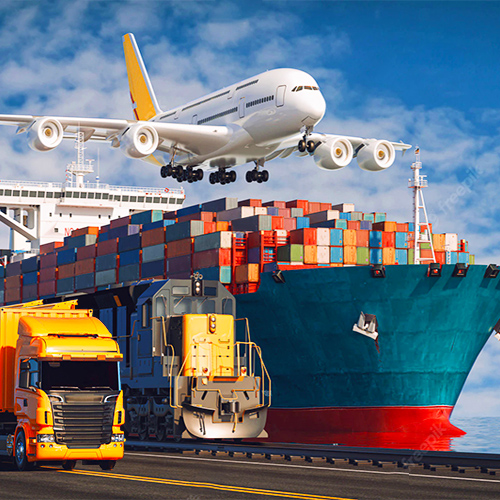
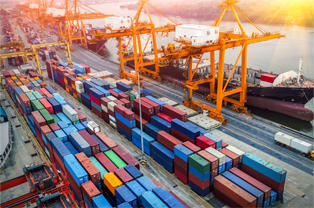

Sea transport is indispensable for world trade, as it is the only option for the cheapest freight transport in large volumes at intercontinental distances, and its share reaches 90% among all transport modes.
Sea transportation is divided into two groups as tramp and liner transportation according to the continuity of the service. In liner transportation, which is also called regular line transportation, ships usually carry containers on the same line by calling at certain ports on certain dates within a pre-planned schedule. Some lines also serve as open cargo, and Ro-Ro ships operating between the same ports are also included in the liner transportation class. In tram transportation, large tonnages are transported, which can be classified as dry cargo, bulk cargo, petroleum and its products, natural gas and others. While “service” is the basis in liner transportation, “load” is based on tramp transportation. In tramp transports, their voyages are pre-planned, not tied to a specific program, and ships carry cargo to every corner of the world by going wherever they find profitable cargo in the free market.
Chartering We come across in Tramp transportation and it is carried out with charter parties. They are ship charter brokers, who negotiate on the articles of charter agreements in a way to protect the interests of the parties and provide the charter of ships in the shipowner and charter companies that are the parties to the charter agreement.
The word shipowner is a word that has passed into our language from French, and the main thing to be used is “owner”, but the word shipowner has taken its place in the sector. In the Turkish Commercial Code Article 1061, it is defined as “The owner of the ship who uses his ship in water for the purpose of gaining benefit”. The Owner (Shipowner) can operate the ships he owns entirely himself, or he can authorize another company for commercial and/or technical management with an agreement, these companies are called Ship Managers.
Ship management is divided into commercial and technical management. While the commercial enterprise covers all the works for the freight/rental of the ships in parallel with the purpose of making money and making profit, which is the purpose of existence of each enterprise, the technical operation covers the maintenance, repair, fueling and maintenance of the ships in order to ensure that the ships are suitable for the load, sea and voyage in accordance with the international rules. , materials, provisions, transactions related to classification societies, certificates, ship personnel etc. supply and organization. Commercial operation is carried out by shipbrokers, and technical operation is carried out by deck and machinery inspectors.
While the fee received by the ship owner for performing the transportation service is called ‘freight’ in chartering a ship on a voyage basis, it is called ‘rent’ in chartering a bareboat ship on a time basis. While the commercial and technical administration remains with the owner in chartering a ship on a voyage basis, the technical administration remains with the owner and the commercial administration remains with the charterer in chartering a ship on a time basis. In bareboat chartering, the owner transfers both the commercial and technical management of the ship to the lessee, and the charter company is now the owner against third parties. Legally, the charter company in a bareboat charter is called the ship operating contractor (disponent owner). In the sector, companies that rent the ship as a time charter are called the disponent owner.
They can work in companies that equip ship chartering brokers, ship operating contractors, commercial ship operators, as well as in importer, exporter and trader companies that can be in the position of lessee in the charter contract; Those who charter the ship in accordance with the goods bought and sold, negotiate freight/rent, negotiate the terms of the charter in favor of the charterer, closely follow the loading and unloading operations of the ship to avoid demurrage, solve the problems, and make demurrage-dispatch calculations at the end of the voyage. leasing broker is also rarely called freight broker.
In addition, it brings together the ship side and the cargo side under free market and competition conditions, finds a ship for cargo, finds a ship for cargo, acts as an intermediary in the conclusion of charter agreements, contributes to the solution of the problems that arise between the parties during both connection and voyage, and follows the voyage until the end. There are brokerage companies that charge commissions on freight/rental income. Intermediary broker companies can be examined in three groups according to their powers and the services they provide; exclusive brokerage; is that the cargo and/or ship owner authorizes a single brokerage firm and works only with it. Semi-exclusive brokerage; is that the cargo and/or ship owner authorizes several broker companies and works only with them. Competitive brokerage; There is no general authorization. Competitive brokers try to make connections by keeping track of ship positions and freight/rental offers, bringing together the appropriate ones. Tonnage, region, ship characteristics, cargo characteristics, etc. It divides it into different groups such as and delivers it to the groups that are suitable for the incoming cargo or ship demand via multiple e-mails. In addition, it communicates the request by making phone calls with companies that it has close relations with or considers to be completely suitable for transportation.
Contrary to what many people know, a charter broker is not only the ‘intermediary company’ that brings the ship and cargo together, enables them to agree on the freight/rental and charter clauses, follows the ship throughout the voyage of the ship, and helps the parties to come to an agreement in case of problems, as described in the paragraph above. . Also by ship; These are the persons who carry out the ship-load connection at shipowners, ship management contractors, commercial ship operator companies and importer, exporter and trader companies on the freight side.
There may also be one or more brokers that bring the ship and cargo owner together in a connection. Even if the brokers in between are competitive brokers, the broker on the owner’s side (for that connection) is called the owner’s broker. The owner’s broker observes the rights of the shipowner and acts on his behalf. The broker on the tenant side (for that connection) is called the charter broker (Charterer’s broker), the tenant broker observes the rights of the tenant and acts on his behalf.
When the broker agrees on the terms of the lease agreement, he is entitled to a fee. In case the parties and parties violate the terms of the agreement, although the two parties have agreed on the terms, depending on the lease agreement, the broker may be entitled to a fee, albeit at a certain rate. The brokerage commission is paid by the carrier.
Brokers, as can be seen from the descriptions, operate in terms of knowledge, skill and trade. For this reason, they are the people who provide the marketing need without the need to own the thing that is the subject of the agreement, carry it personally, and provide the agreement of the parties with intelligence and market dominance.
It may not be economical and practical for companies that always deal with maritime trade to establish a maritime department that will employ brokers for each of them to run their business in the fastest and best way. In these cases, brokerage service providers provide these maritime companies with quality service at a much lower fee than is required to establish a brokerage department, or even if they have brokering departments, they may prefer to work with brokerage companies that have a wider portfolio, are competent in their subject, and conciliate. .
Brokers also provide indication services to the tenant companies by searching and/or calculating freight in order to carry out the purchase and sale of goods. For example CIF; The broker can be consulted about what “Freight” should be in a Cost Insurance Freight based sale.
Brokers need to be in close contact with the world maritime trade, have a wide range of intelligence including sales and leasing, and have a command of the practices of various countries in order to find a suitable ship – a suitable load for the ship. For this reason, consultants who update their knowledge and have a wealth of information, must be reputable, reliable and serious organizations as they act as intermediaries between the parties.
Being an international business, brokers should not only have a good command of the English language, but also the jargon of professional English and even business English abbreviations. Even if the parties are Turkish companies, English is used as the language of correspondence.
The brokerage profession, which has existed in the world maritime trade since 100-150 years ago, has developed tremendously over time and gained a reputation all over the world as a profession that requires expertise and many features. In this period, the brokers have gained a wide range of intelligence as well as knowledge and skills, and by making the best use of today’s communication technology, they have provided and continue to provide economic benefits to the companies they mediate.
The purpose of existence of the owner, ship management contractor, commercial ship operator is to undertake the business of earning freight for the ships they own/operate, from paying the salary of the seafarers, which are the expenses of the company, fuel, material, stores, maintenance and repair, insurance, operating and commercial expenses, loan debts, etc. . It is the primary duty of the brokers on the ship side to cover all the costs and make a profit on top of it. The fact that the ship owner will lose thousands of dollars due to the ship waiting for cargo even for a single day, and operating at least three or four ships at the same time with good freight and reliable charterers, especially in ruthless competition and economic crisis environments, is an extremely stressful profession. Apart from knowledge and experience, it is necessary to combine many personality traits such as strategic, fast and correct decision-making ability, resistance to stress, ability to do more than one job at the same time, etc. Brokering, which has been trained for years and even preferred as a profession, in many countries that attach importance to maritime trade in all aspects, especially in England, has unfortunately only recently become noticeable in our country. Considering that there is a job guarantee for years, all young people are directed to work on ships, both in universities and in government institutions, and ship management is referred to only in terms of ship personnel and technical aspects. The subject of “‘ is always overlooked.
Some of us, the brokers, who learned the profession of chartering only through a master-apprentice relationship in business life, by examining international charter agreements, by following Bimco’s publications and comments, by researching and most importantly by living, were lucky that DB, one of the largest and strongest shipowner companies of our country and known as the school of the sector. . Sea Transport T.a.s. We learned the profession in the tramp department. Today, in the departments of maritime business management, students are given training on the management of all maritime businesses in general. Ship brokering education is a very specific education, and education in this field was started in Turkey for the first time in 2017 at Piri Reis University Maritime Vocational School and Piri Reis University is still the only university in Turkey to provide this education. Young people, who have stepped into business life by getting education, will make rapid progress by adapting to the sector and the job much more quickly. This will create added value for companies, employees and the country’s economy.