
 Türkçe
 العربية
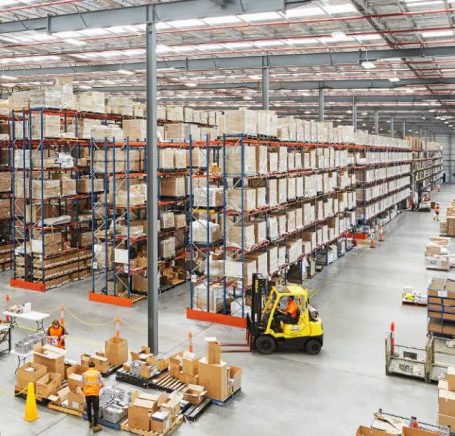

As it is known, with the President’s Decision No. 3080 dated October 13, 2020 on Supporting Foreign Logistics Centers (YDLM), the issues related to supporting cooperation organizations and users located in Turkey for logistics centers to be established abroad were regulated. When we look at the definitions section of the decision, “cooperation organizations”; Companies established by the Turkish Exporters Assembly (TİM), the Union of Chambers and Commodity Exchanges of Turkey (TOBB), the Foreign Economic Relations Board (DEİK) or those in which at least 51% of the shares are owned, and “users”; We see that there are companies that are members of the exporters’ union, TİM, TOBB, DEİK, exporters’ unions, chambers of commerce and/or industry, sector associations and organizations, and associations, unions and cooperatives established by manufacturers.
In other words, the “cooperation organization” (TİM, TOBB, DEİK or its affiliates) abroad, related to the distribution of export products, storage, loading / unloading, shipment, handling, dangerous goods services, cargo combining / splitting, cold storage, distribution, etc. It will establish or lease centers arranged for international transportation and logistics to carry out its business, and then sell services related to these works to “users” (exporters, transporters, etc.) whose scope is quite wide. In YDLMs within the scope of the support, it will be essential to provide services only for Turkish export products. In a nutshell, that’s what it seems.
A request for a support policy in this regard must have come from “cooperating organizations”, and the Presidency must have favored this request and made such a decision. As someone who has spent his life in these works, there is something I cannot understand: Our biggest export-oriented trade partners are EU countries, and more than half of our exports are from Union countries. Only our exports to Germany, Italy, France and England constitute almost 25% of all our exports (the reason I mentioned the United Kingdom among EU countries is that these rates belong to the year 2020). It follows from this that the support intended to be given to the production and sale of services, which is our subject, will be directed to YDLMs to be opened in the EU in general, especially in these 4 countries.
However, these countries are countries that have completed their developments in logistics infrastructure, operating techniques, transportation and employment decades before us and are always advancing. Logistics center management (a wide range from simple warehousing to assembly sub-industry) has become an industry on its own in these countries and serves in locations that we can call every step of the way according to the needs and purses of each requester. Most global brands located in the EU and supplying goods from our country have already developed their own logistics center solutions. After describing the situation in this way, I come to the point that I cannot understand. “Collaboration organizations” considering going into the YDLM business should also have calculated to whom they will sell the service. After all, we are talking about organizations that have the most experts in our country on this subject. Here I am, I cannot understand this calculation that I assumed they did.
Our President has certainly signed this decision by considering the interests of all entrepreneurs, regardless of big or small. For example, let’s say that an exporter or transporter aspires to purchase this service from centers to be opened in this or that country. If the cost and quality of the service will be more affordable than what you get now, why not? Not to mention that it caresses national feelings. But if the price/quality ratio is not going to be more attractive, it cannot be expected to act on any emotion at that point. This is today’s reality. I am sure that “cooperation organizations” know this best. On the other hand, this initiative can be a vision for projects for Africa, for example. I think that in recent years, our political and commercial favor towards the Black Continent has been blowing positive winds. The five of Egypt, Libya, Tunisia, Algeria and Morocco seem to push the 10% threshold of our exports in the coming periods. Senegal, Ghana, Nigeria, Ethiopia are candidates to be our serious export targets. Here are the promising fields for the YDLM initiative and I’m sure they need it. Although there is no rule that says “first person succeeds and stays”, I don’t need to count the advantages of being the first. It is quite possible that such an initiative, which will not even attract the attention of the sectoral media in Germany or England, will be perceived as a very important and even sensational development in Africa.
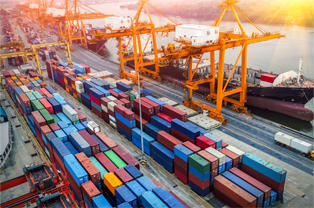
Let’s turn to today’s practices, leaving aside this issue, which has not yet been put into practice as far as I know. The facility called logistics center is a static element, and for it to work, that is, to live, there must be a regular flow of goods from outside to inside and from inside to outside. In other words, the logistics center, which is deprived of regular and smooth transportation, is of no use to anyone. With the unfortunate closure of the Suez Canal in the past few days, it is estimated that the daily trade loss on a global scale is around 10 billion dollars. If you have the most modern logistics centers in the world, you are doomed to sleep with the news of a water channel with a daily capacity of 50 ships. The result is very simple: NO TRANSPORTATION, NO LOGISTICS, NO LOGISTICS, NO CENTRAL. That is all. Playing for the leadership of world trade, China makes its biggest investments in the field of transportation, and realizes projects worth trillions of dollars one by one. He created the sea corridor to the African coasts through the South Asian ports that he financed in different countries. He predicted from the beginning that the repayments of the ports he had built by lending would not be easy, and when the time came, he exchanged his receivables with 40-year, 90-year usage rights. With the Silk Road line, which some call a dream, he made the transportation of goods from his country to London a reality. He made highway investments in Kazakhstan and Afghanistan for this purpose. China teaches neo-imperialism lessons to those who dream of a new world order, to the “Great Reset”. By producing, selling and transporting, it blocks the US in the Atlantic for now. Aim; to imprison him in his own continent tomorrow. It develops its vision by leading to trade and ensuring that the goods it sells reach its destination quickly.
Let’s look at ourselves. In order to deliver half of our exports to the EU countries, we either spend days in queues at land gates, or get off the ships and get on the trains. we do. While the “cooperation organizations” were pushing the state’s door for YDLM support, did they also bring the problems of transportation that will give life to YDLMs to the agenda in their meetings and lobbying meetings, even from the sidelines? While there is comfort in the convenience of “I gave the goods to the transporter, no matter how he takes it”, I don’t think so. This comfort is the comfort of dictating the terms of the contract, ignoring the liability limits drawn by the CMR and other conventions and the Transport Works chapter of the TCC, and imposing far beyond these. It is a comfort that negatively affects the logistics industry in terms of its results.
We have around 88,000 exporting companies. Our foreign trade transactions are naturally subject to customs legislation. The number of companies that were able to obtain the Authorized Economic Operator Status (YYS) in accordance with the legislation that entered into force in 2014 with the aim of facilitating customs procedures is only 549 (0.6%) in 7 years. Almost all of them aim to take advantage of the inspection line only. The number of those who have On-Site Customs Clearance in Export, which is the main goal, is just 31, just like a “camel ear”. We have 3500 transporters with international transport authorization certificate. Among these, the number of companies with Authorized Sender authorization is only 22. Now it is necessary to think: What is the reason for not being able to move forward from this point in 7 years? Are the conditions too harsh, or the entrepreneur too inadequate? Or is there no worthy facilitation available? Have “collaboration organizations” ever discussed these questions?
To sum up: If we can only leave our country, there will be no obstacle for our exported goods to reach their destination. I can’t help but think that unless the time of transfer to the border gate/port and actually leaving the country after the exported goods are loaded on the transport vehicle is equal to the times in the countries where we plan to open YDLM, attempting to operate YDLM there will be an attempt like diving backwards into the water. But I suggest to the “cooperation organizations” first of all to analyze the time from the factory ramp to the abandonment of the country’s lands and to carry out activities aimed at shortening this period. Like I said, if we can get out, there’s not much left to arrive. For the logistics works that need to be done after arrival, the available possibilities are already unlimited according to every demand and purse. The main headache of the exporter, the transporter and the entrepreneur is up to the destination. Not after arriving.