
 Türkçe
 العربية








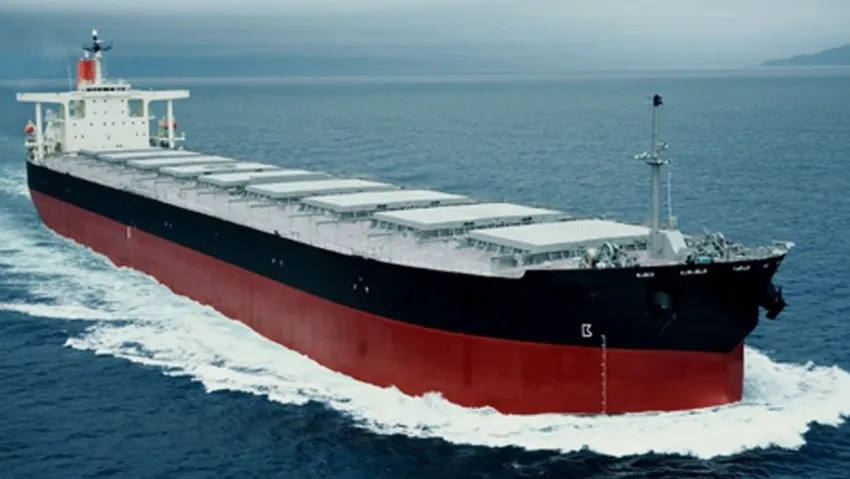
Global markets, which were mobilized by the relaxation of pandemic bans and the discovery of the vaccine, increased the demand for dry cargo. As the supply of ships fell short of demand, freight increased rapidly. The Baltic Dry Index (BDI) exceeded 2,000 points for the first time in two years.
Baltic Dry Index (BDI), one of the leading indicators of the global economy, increased by more than 15 percent in the last week, exceeding 2,000 points for the first time in two years. Speaking to the WORLD, industry experts emphasized that major economies, especially China, have melted existing stocks, and that the demand for new products has increased with the relaxation of pandemic bans and the discovery of a vaccine.
“I wouldn’t be surprised if we see 3,000 points”
At the beginning of this year, BDI started to rise rapidly in January for the first time in 10 years. Andex, which increased by 35 percent in 1 week, was based on 1,850 points. BDI has been active again in the last week, reaching 2 thousand 105 points as of yesterday.
Cihan Ergenç, Vice President of Turkish Shipowners’ Association, said that the revival in the economy and the introduction of delayed demand were effective in this increase. Emphasizing that the demand for dry cargo exceeded their expectations, Ergenç said, “Countries are replacing their decreasing stocks. The market is pretty good. We don’t know how long this demand will last, but I wouldn’t be surprised if BDI sees 3,000 points.” Reminding that the world economy is expected to grow by 5.5 percent for 2021, Ergenç said, “This growth was reflected in freight and commodities.”
China even melted its war stocks
Levent Karaçelik, Chairman of the Board of Mervel Denizcilik, one of the veteran dry cargo brokers of the sector, summarized the reasons for the activity in the dry cargo market and his expectations for the coming months:
“During the pandemic period, due to the shrinkage in the local economies of the countries, the financial resources of the countries decreased a lot. Production and accordingly the supply of goods decreased. Therefore, countries used their existing stocks instead of imports. Stocks melted. Even China consumed its war stocks.
The wheels of the economy began to turn
In the last two months, pandemic bans in countries have been relaxed. The discovery of vaccines also made it widespread. As a result, the wheels of the economy began to turn. Production is done again. This allowed more money to return to the market. Many EU countries, the USA, Japan, South Korea and China, have begun to transfer funds to the market that have never been seen before. In this case, the revived money circulation also increased the financing opportunities.
Freight transported by sea increased by 100%
Increasing financing opportunities prompted countries to renew their stocks of all investment and food products, especially grain, iron and steel, and coal, which they had almost zeroed out. In particular, investments in energy were revived. This further increased commodity purchases. The amount of goods transported by sea in the market has increased by 100 percent in the last 3 months compared to the previous year.
Ship supply far lags demand
However, the entry of new ships into the fleet fell far behind my demands. Therefore, in the case of supply and demand, a situation in favor of the ships emerged. For this reason, freight rates have increased in every tonnage and all over the world, except for capesize and kamsarmax ships.
If there is no 3rd wave, the increase may accelerate
Levent Karaçelik said, “Depending on how quickly stocks will be replenished in the second half of 2021, this increase in freight may stop. However, a major decrease is unlikely for 2021. The indicators given by the Chinese economy for the second half of the year suggest that the opposite may happen and freight rates may exceed today’s figures. On the other hand, large operator companies are making transportation contracts that will cover the second half of the year with the current freight rates.So, some parts of the second half freights expect a higher market, the other part will continue in the same way, and some expect a decrease. The only thing that everyone has in common is that if COVID-19 makes a third wave that will cover the whole world, economic activity will decrease again and this will be reflected in the freights,” he said.
Container crisis also increased demand for dry cargo ships
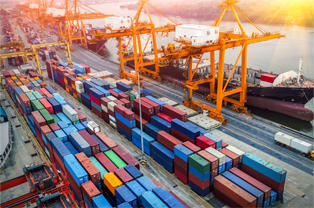
Industry officials said that the shortage of equipment in maritime container transportation, which has been increasing for about a year, has increased the demand for dry cargo ships. Importers or exporters, who previously transported their goods with container ships, began to knock on the doors of dry cargo shipowners because they could not find equipment and make reservations on the ships. Although volumes are not very high yet, officials state that some cargoes are shifting from containers to dry cargo ships.